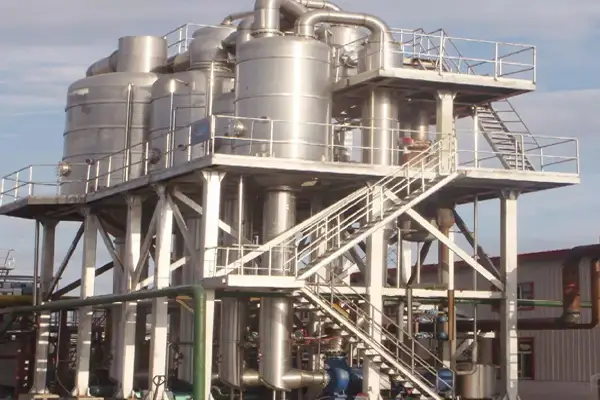
A heat exchanger, a separator, and a circulation pump make up the forced circulation evaporator. At Pinakin Technology Solutions, the product is heated in the exchanger before being transferred to the separator. Following evaporation, the liquid component is fed back to the exchanger. Unlike the falling film evaporator, the forced circulation evaporator may work with suspended particles or the existence of crystals without impeding the exchange pipes for substances on the verge of crystallization. Electrical motors, valves, and regulators are used in forced circulation systems to circulate water or other thermal fluids through the collectors. This allows for a great deal of freedom in the placement of system components. Clients frequently misunderstand a falling film evaporator for a forced circulation
evaporator, but the two are not identical. Falling film evaporators are preferred when tubing coat is rare, but forced circulation flash evaporatorsare preferred when tube coatings is a severe problem. This evaporator, unlike rising and falling film evaporators, is particularly meant to prevent boiling while the exchanger fluid is in the tubes. However, some of the water in the evaporator liquid boils and is lit up as it enters the vapours body. The mist body, often known as the flash chamber, is what differentiates the mist from the liquid. The liquid that exits the flash chamber is recycled back by the recirculating pump. Our forced circulation evaporator mechanism's rotating pump guarantees fast velocity in the exchanging tubes, reduces the number of deposits on the walls, and prevents evaporation, minimizing the danger of overconcentration. Pinakin Technology Solutions is the best at what it does because our team has years of experience in this field and strives to elevate Pinakin Technology Solutions to new heights via innovation and technology.
A Forced Circulation Evaporator is a type of evaporator where the liquid is pumped at high velocity through heat exchanger tubes to prevent boiling inside the tubes, with evaporation occurring only when the liquid enters the vapor-liquid separator (flash vessel).
It is preferred when dealing with liquids that have high viscosity, suspended solids, a tendency to scale, or when crystallization is part of the evaporation process.
The system consists of a tubular heat exchanger (calandria), a vapor-liquid separator (flash chamber), a high-capacity recirculation pump, and associated piping and control valves.
The high velocity of the liquid through the tubes suppresses boiling inside the tubes, keeping solids suspended and reducing fouling or crystal deposition on the heat transfer surfaces.
All Copyrights © 2026. Pinakin Technology Solutions
Owned & Powered by : #1 Vinayak InfoSoft - SEO Company Ahmedabad || Disclaimer || sitemap